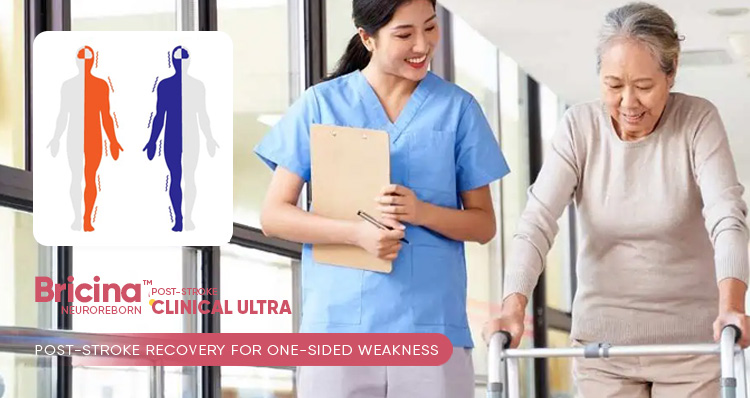
After a stroke, many people live with one-sided weakness or paralysis
The arm is slow and heavy when lifting, the hand grips poorly, the leg drags, the foot does not land flat, walking long distances requires a cane, and muscles may spasm, cramp or curl up. Disturbed sleep is also common, because the injured brain and overworked muscles never fully relax at night.
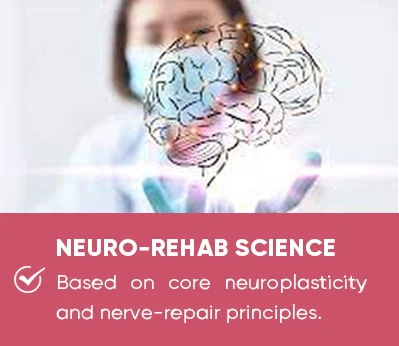
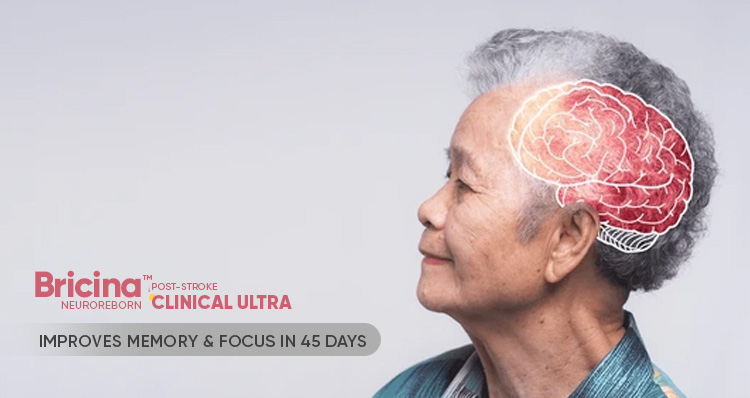
Modern stroke rehabilitation and a structured home program can still help the brain and nerves adapt. The key concept is neuroplasticity – the brain’s ability to create new connections and reorganize itself, even months or years after the original stroke.
Typical Recovery Timeframes (Approximate)
Every stroke is different, so no program can guarantee results. However, research on motor recovery after stroke shows some common patterns when people follow regular rehabilitation and medical advice:
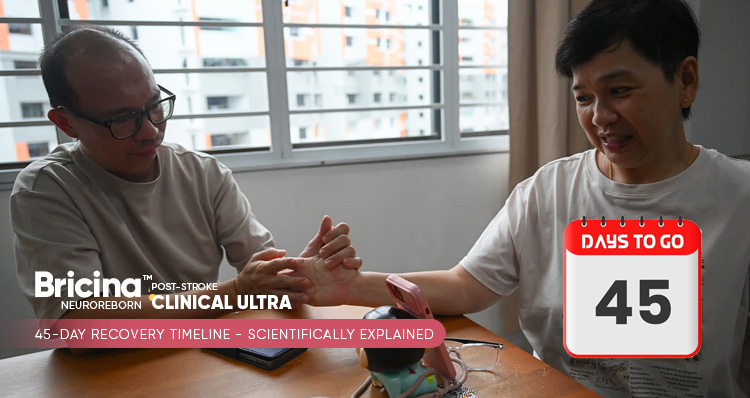
- First 4–6 weeks: this is often when patients first notice easier movement in the weak side – less stiffness, fewer cramps, and slightly better control when lifting the arm or placing the foot. Many people report walking a bit farther with the cane and sleeping more deeply.
- 2–3 months: scientists describe a “sensitive window” of recovery where the brain responds strongly to therapy. In this period, many patients regain a significant portion of lost movement if they consistently practice targeted exercises and follow their rehabilitation plan.
- 3–6 months: large clinical datasets suggest that patients who respond well to rehab can recover roughly half to three-quarters of their lost motor function in this window. This may mean a stronger grip, lifting the arm higher, a flatter foot strike, and walking longer distances with more confidence.
- Beyond 6 months and even years later: improvements usually slow down but do not stop. With ongoing practice, many people continue to refine balance, gait, coordination and hand function long after the first year post-stroke.
These are average trends from published studies, not promises. Your personal recovery will depend on the size and location of the stroke, age, general health, and how closely you follow your rehabilitation and doctor’s guidance.
Scientific Basis: How the Brain and Blood Vessels Can Still Recover
Recovery from one-sided weakness is supported by several well-described biological mechanisms. The most important are:
- Neuroplasticity after stroke: the brain can reorganize surviving areas to take over some functions of the damaged region. Clinical and rehabilitation studies show that the brain is especially responsive to therapy in the first 2–3 months, but retains a capacity for plastic change into the chronic phase. For an overview, see PhysioPedia – Neuroplasticity After Stroke and Grefkes & Fink, Neurological Research and Practice (2020) .
- Cerebral blood-flow and vascular repair: improving blood flow and reducing blood viscosity can help protect brain tissue around the injured area. Lumbrokinase, a fibrinolytic enzyme derived from earthworms, has been studied as an adjunctive therapy in acute ischemic stroke for its potential to reduce fibrin and support microcirculation. See: Ji et al., European Journal of Pharmacology (2008) and Chen et al., Trials (2022, LUCENT protocol) .
- Neuroprotection and membrane repair (Citicoline): Citicoline (CDP-choline) has been investigated in multiple randomized trials in acute ischemic stroke for its ability to support cell-membrane repair and reduce infarct size in some patient groups. While results are mixed, meta-analyses suggest a higher rate of functional independence in certain populations. References: Agarwal et al., PLOS ONE (2022) and Secades, Journal of Stroke and Cerebrovascular Diseases (2016) .
- Synapse formation and nerve regeneration (Uridine, DHA and related nutrients): experimental studies show that combinations including uridine and omega-3 fatty acids can increase synaptic proteins, dendritic spine density and markers of neurite growth. This suggests a potential to support long-term connectivity in injured neural networks. See: Wurtman et al., Brain Research (2009) and van de Rest et al., Theranostics (2017) .
- Nerve growth–factor stimulation (Lion’s Mane mushroom): pre-clinical work on Hericium erinaceus (Lion’s Mane) shows that its compounds (hericenones and erinacines) can stimulate nerve growth factor (NGF), promote neurite outgrowth and support nerve regeneration in animal and cell models. Human evidence is still limited, but these mechanisms are of interest for neuroregeneration. See: Wong et al., International Journal of Medicinal Mushrooms (2012) and Contato et al., Nutrients (2025) .
These scientific findings do not prove that any single supplement, ingredient or program can cure stroke, but they help explain why, when combined with consistent rehabilitation under medical supervision, some patients with one-sided weakness gradually regain strength, control and walking distance over months.
Important Safety Information
Stroke is a serious medical condition. Any nutritional product or home-based program should be used only as a complement, not a substitute, for standard stroke rehabilitation and medications prescribed by your doctor. Always talk with your neurologist or rehabilitation physician before starting new supplements, especially if you use blood thinners or have other chronic conditions.